
As utilities across the UK accelerate investment in smarter, more efficient infrastructure, pump technology is evolving at remarkable speed.
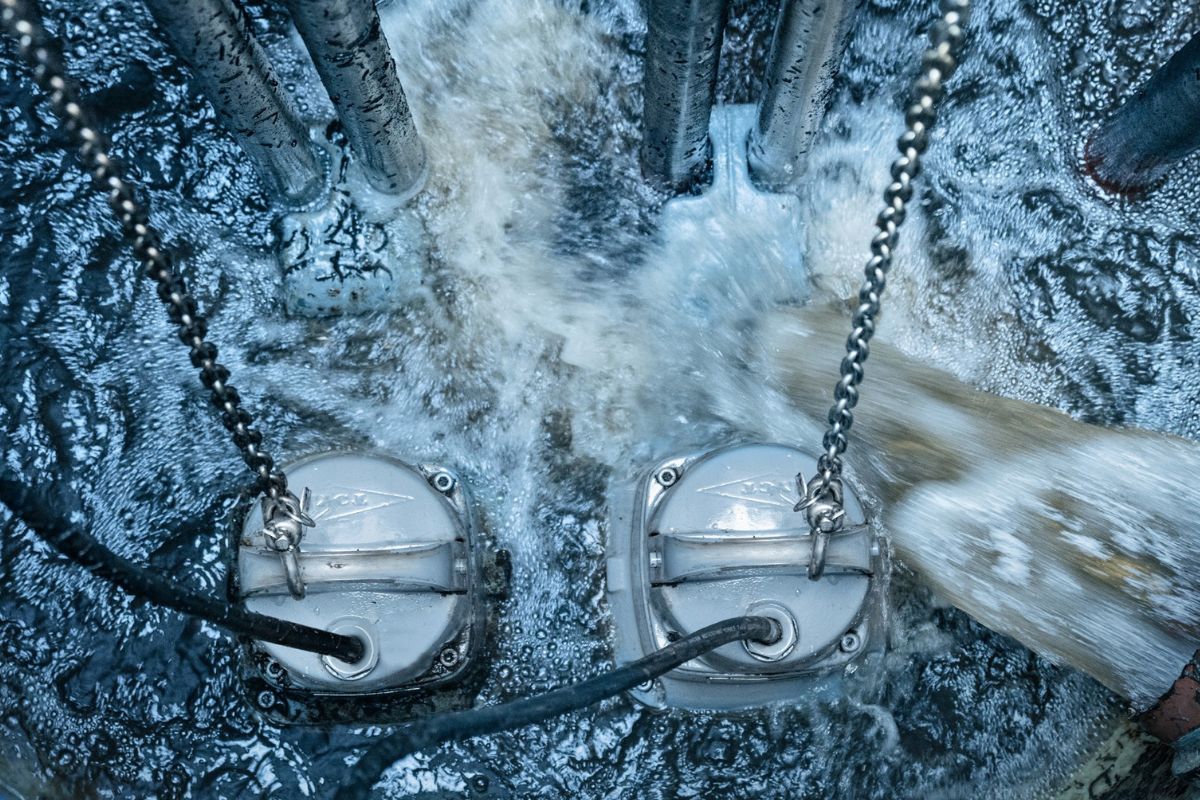
The latest generation of intelligent pumping systems is transforming how utilities manage their networks - making it possible to monitor, predict and optimise performance across catchments in real time. Much of the sector's infrastructure requires upgrading and smarter management, as the Independent Water Commission's Final Report emphasised. Utilities are seeking solutions that balance compliance, cost and climate resilience - all under unprecedented public scrutiny.
Against this backdrop, utilities are beginning to trial and scale new approaches that combine proven engineering with digital intelligence. Smart pumping systems are showing measurable impact - improving efficiency and performance, cutting operational costs and reducing carbon emissions - while generating data that supports predictive maintenance and iona-term asset planning. The result is a rapid return on investment alongside visible progress for regulators and customers.
With built-in intelligence, smart pumps can automatically adjust speed, monitor performance remotely and flag issues before they arise. This gives utilities real-time visibility across catchments, enabling data-driven management of stormwater, sewer capacity and weather-related challenges. These insights help prevent spills where possible or, when unavoidable, enable operators to control where they occur - minimising environmental impact while reducing costs and energy consumption.
As climate change drives more extreme and unpredictable rainfall, this catchment-wide perspective will become essential. The good news is that the technology already exists, enabling a shift from reactive maintenance to predictive operations and paving the way for water utilities to achieve true resilience.
Smart Pumping in Action - Case Studies
Yorkshire Water's partnership with Xylem offers a powerful example of this transformation. One of the utility's key wastewater pumping challenges was blockages. A particularly problematic site requiring 2-3 reactive visits a week was chosen for an initial trial of the intelligent Flygt Concertor pump.
During the trial, reactive visits to site for blockage issues were completely avoided. As a result, Yorkshire Water decided to roll out the Flygt Concertor across its most challenging pumping stations - in less than a year Xylem has delivered solutions to over 150 dual and triple pumping stations. By deploying intelligent Flygt Concertor pumps, Yorkshire Water reduced reactive callouts to completed sites by 51%. Improvement in hydraulic efficiency compared to legacy pumps has contributed up to a 29% reduction in power consumption.
Scottish Water partnered with Xylem to upgrade hundreds of pumping stations with intelligent systems. In an initial trial, the Flygt Concertor reduced unplanned maintenance by 99.8% and cut energy use by up to 60%. The Xylem Avensor digital monitoring service for pump stations also significantly reduced reactive callouts. The successful trial led to wider adoption of hundreds of pumps across Scotland.
Nathan Wield, Wastewater Operations West Manager for Scottish Water, said:
"Xylem has been very responsive to our needs, and they have made adjustments to their solutions to help us work even more efficiently. The visibility Avensor gives us is brilliant. We use the Avensor app to view a pump station's performance before we go to the site, and if everything is going well, we might not even need to go there at all."
In Wales, Dwr Cymru Welsh Water (DCWW) will roll out hundreds of Flygt Concertor intelligent pumping systems across its wastewater network over the next five years, following a successful deployment during AMP7.
In 2020, DCWW partnered with Xylem to pilot the Flygt Concertor 6020 pump and Nexicon control panel at 10 problem-prone pumping stations. These sites had experienced frequent blockages and required regular cleaning and maintenance.
Over the six-month trial:
- Blockages were reduced at all sites - with one station reducing blockages from 53 to zero.
- Site cleaning requirements dropped significantly.
- The reduced need for ancillary equipment freed up capital for other investments.
Following this success, Welsh Water upgraded approximately 80 pumping stations with Flygt Concertor systems during AMP7.
Building on the strong performance of this initial rollout - which saw average energy savings of 40% - DCWW plans to install Concertor systems at an additional 400 sites during AMP8, including the new, larger Flygt Concertor 6030. It is the first UK utility to adopt the model.
These case studies demonstrate the evolution of pumping is about more than hardware - it's about integrating digital intelligence, operational insight and sustainability into every part of the network.
As the evolution of pumping continues, so do the opportunities. Predictive tools now offer the ability to remotely connect, monitor and manage entire networks across both water and wastewater systems. The technology is here and is already transforming how utilities operate - marking a major step forward in the shared effort to build a more water-secure world.
Technology Spotlight
The Flygt Concertor from Xylem represents the next step in the evolution of pumping - an intelligent wastewater pumping solution that delivers measurable improvements in performance, sustainability and reliability.
By combining adaptive control, self-cleaning functionality and digital connectivity, the Flygt Concertor helps utilities achieve substantial operational efficiencies while supporting long-term asset management goals.
- Energy efficiency: the Flygt Concertor delivers average energy savings of up to 40% through real-time adaptive control that continuously optimises power usage. This not only lowers operational costs but also contributes to reduced carbon emissions and a smaller environmental footprint.
- Reduced call-outs: with its intelligent control and self-cleaning design, the Flygt Concertor significantly reduces blockages, unplanned maintenance and site visits. This leads to fewer vehicle journeys and lower operational costs while also enhancing health and safety by reducing the need for engineers to travel and perform on-site interventions.
- Smarter asset management: through standardised hardware and seamless integration with Xylem's Nexicon and Avensor platforms, the Flygt Concertor supports predictive maintenance and data-driven decision-making. Utilities can monitor performance across their network, identify trends and optimise assets over the long term - scaling intelligent management across hundreds of pumping stations.
Source: Institute of Water