
As the UK water sector prepares for Asset Management Period 8 (AMP8), the pressure to deliver environmental improvements, operational resilience, and net-zero targets has never been higher. With the 2025–2030 investment cycle prioritising the reduction of storm overflows and the modernisation of aging infrastructure, the spotlight has turned firmly toward the digitisation of pumping stations.
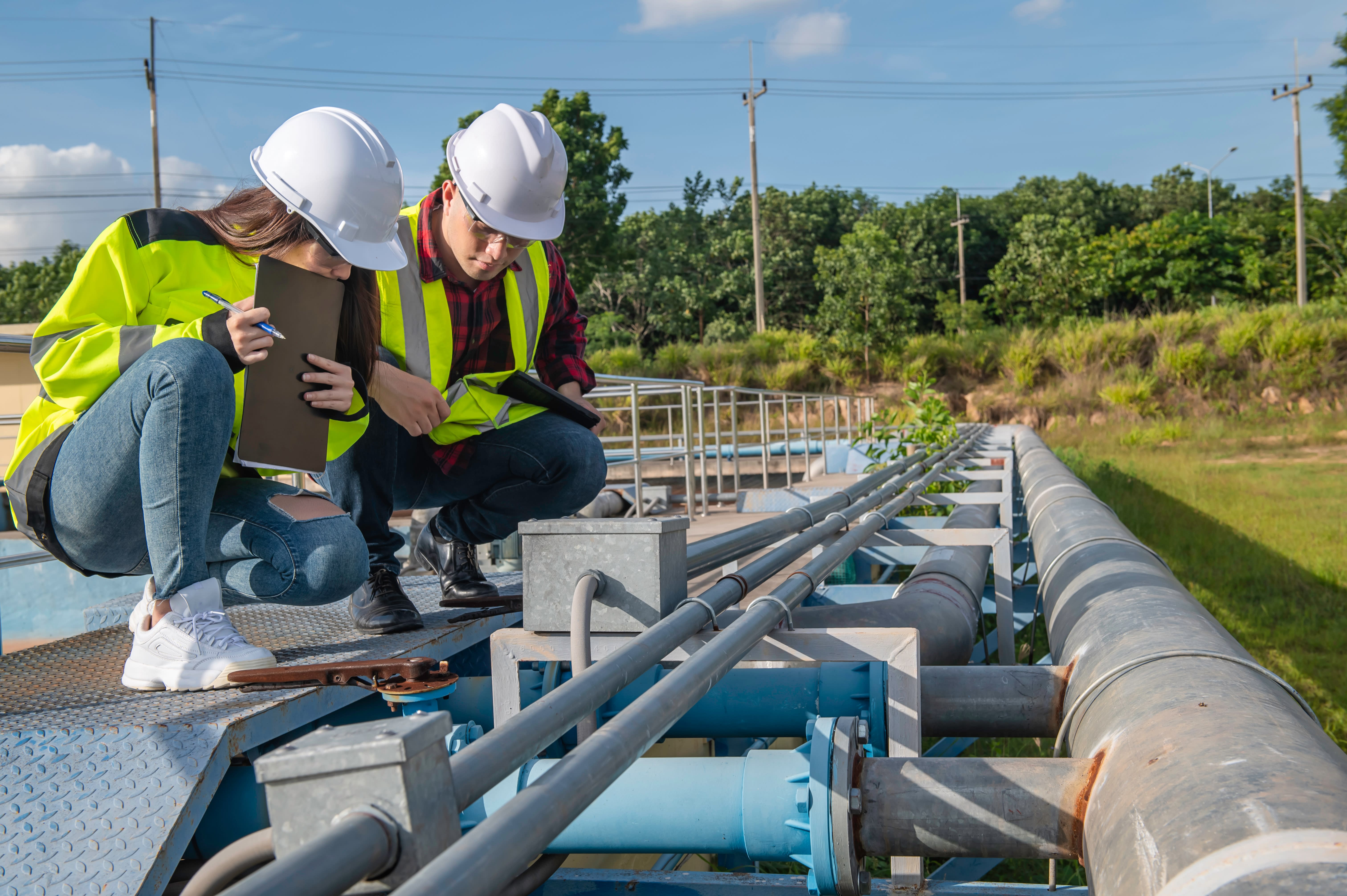
For decades, many remote pumping and lift stations have operated as "black boxes"—isolated assets with limited or non-existent telemetry, relying on reactive maintenance schedules or, worse, customer complaints to identify failures. To meet the rigorous data transparency and efficiency expectations, utilities must bridge the gap between legacy operational technology (OT) and modern SCADA systems.
The solution lies in implementing robust, secure, and SCADA-ready connectivity. By deploying intelligent edge architecture, water companies can transform these isolated outposts into data-rich assets, ensuring compliance and driving operational efficiency.
The Integration Challenge: Bridging Legacy Pumping Stations with Modern SCADA
One of the primary hurdles in the digitalisation of wastewater infrastructure is the heterogeneity of the asset base. A typical water utility operates a mix of equipment ranging from modern PLCs to legacy controllers installed more than twenty years ago. These devices often communicate via serial or fieldbus protocols like Modbus RTU or Profibus, which are incompatible with modern, IP-based cloud or enterprise SCADA systems without intervention.
The "Rip and Replace" Fallacy
In this context, capital efficiency is paramount. A "rip and replace" strategy—discarding functional legacy PLCs solely to achieve connectivity—is rarely cost-effective. Instead, the industry best practice is the deployment of industrial protocol gateways and edge controllers.
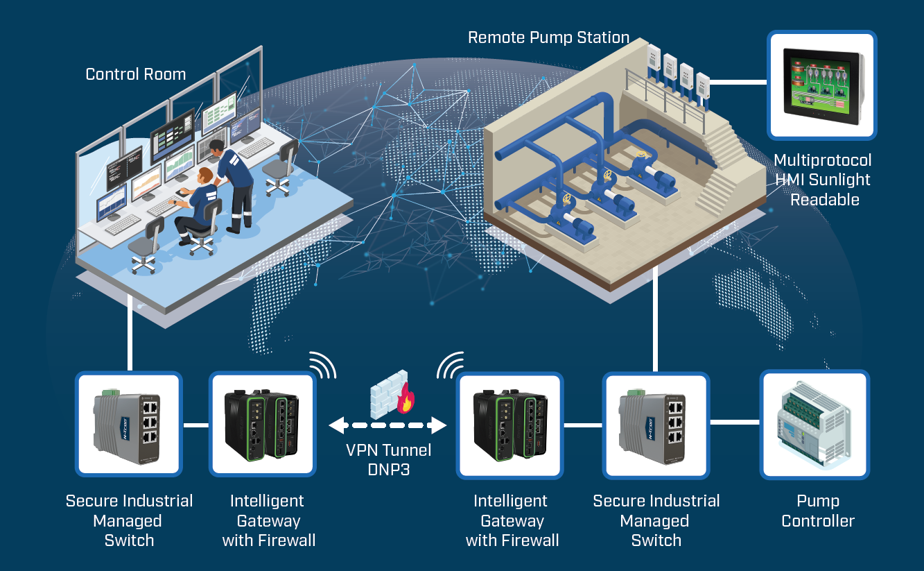
These devices act as a translation layer, capable of polling data from legacy equipment via serial connections and converting it into modern protocols such as DNP3, OPC UA, or MQTT for transmission to the central SCADA system. This approach extends the lifecycle of existing physical assets while unlocking the data required for modern regulatory reporting.
Connectivity in Hard-to-Reach Locations
Pumping stations are frequently located in topographically challenging areas where fixed-line connectivity is either unavailable or very expensive. The transition to cellular connectivity (4G/5G) is the logical step for remote telemetry. However, reliance on cellular networks introduces challenges regarding data completeness. Network failures are common in remote locations.
To mitigate this, modern specifications for pumping station telemetry should support store-and-forward capabilities, so that if the network connection is lost, data is buffered locally at the edge. Once connectivity is restored, the historical data is backfilled to the SCADA system, ensuring a complete compliance record.
Data-Driven Efficiency: Optimising Energy and Maintenance
Pumping systems are among the highest consumers of energy in the water cycle. By transitioning from simple status monitoring (on/off) to granular data acquisition, utilities can unlock significant efficiency gains.
Edge Analytics and Bandwidth Optimisation
Transmitting high-frequency raw data from hundreds of remote stations can overwhelm central servers and incur significant data costs. The emerging standard involves performing calculations at the edge. Intelligent edge devices can process raw variables—such as flow, pressure, and power consumption—locally to derive Key Performance Indicators (KPIs) like thermodynamic efficiency or specific energy consumption.
Only the actionable insights or anomalies are transmitted to the central system. This reduces bandwidth usage while providing control room operators with immediate, decision-grade information.
From Reactive to Predictive Maintenance
Remote monitoring enables the shift from time-based maintenance to condition-based maintenance. By continuously monitoring parameters such as vibration, temperature, and current draw, operators can detect the early warning signs of pump failure (such as bearing wear or impeller blockages).
This predictive approach allows for planned interventions, reducing the substantial costs associated with emergency call-outs and ensuring that assets remain available during critical storm events.
Best Practices for Secure Remote Connectivity
As critical national infrastructure, water systems are subject to stringent security requirements. Connecting remote OT assets to a central network expands the attack surface. Therefore, security must be integral to the connectivity architecture, not an afterthought.
Implementing Defense in Depth Security strategies should follow the IEC 62443 standard for industrial automation and control systems. Key principles include:
- Network Segmentation: Utilising the Purdue Model to separate OT networks from business IT networks.
- Secure Tunnels: All cellular communication must be encapsulated within secure VPNs (such as OpenVPN or IPsec) to ensure data integrity and confidentiality over public networks.
- Firewalling: Edge devices must include stateful firewalls to restrict traffic. A "deny-by-default" policy should be employed, allowing only necessary traffic on specific ports.
- Authentication: Strong password policies and, where feasible, multi-factor authentication (MFA) or certificate-based authentication for device access.
By adopting these standards, utilities can ensure that the drive for openness and data transparency does not compromise system resilience.
Real-World Implementations
To illustrate how these principles are applied in the field, we can look at two specific use cases where legacy constraints were overcome through intelligent edge connectivity.
Case 1: Industry 4.0 Pump Efficiency Monitoring
Context: An industrial operator sought to monitor hydraulic performance and pump efficiency across multiple remote sites as part of an Industry 4.0 initiative. The existing pumps exposed telemetry via a wired Modbus RTU daisy chain, creating a complex integration challenge for upstream 4G connectivity.
The Solution: The operator implemented a Red Lion DA30 edge gateway. This device was configured to poll the Modbus RTU chain, utilising custom drivers to map proprietary protocols. Crucially, the device performed local calculations to derive thermodynamic efficiency KPIs directly at the station.
The Outcome:
- Data Integrity: The store-and-forward capability ensured no data was lost during cellular dropouts, maintaining a perfect compliance record.
- Security: Data was backhauled via 4G using OpenVPN encryption, ensuring secure transport to both cloud analytics and on-premise SCADA simultaneously.
- Operational Value: By processing data at the edge, the operator achieved consistent efficiency tracking and faster troubleshooting without the capital expense of replacing the installed pump controllers.
Case 2: Modernising Remote Lift Stations for Municipal Operations
Context: A municipality faced significant operational risks due to a lack of visibility into its remote lift stations. While the central plant utilised a modern ControlLogix system, the remote sites relied on aging SLC-500 PLCs with dial-up connections or degrading fiber. Data was often delayed or missing, increasing the risk of overflows.
The Solution: The municipality standardised on Red Lion FlexEdge® DA50A devices for edge control and communication. These units replaced the legacy networking gear, providing dual-SIM 4G connectivity for redundancy.
The Outcome:
- Unified Visibility: The solution bridged the gap between the legacy PLCs and the modern central SCADA, providing real-time monitoring and control.
- Cost Reduction: Secure cellular VPNs eliminated the reliance on expensive and unreliable dial-up lines.
- Scalability: The modular nature of the edge devices allows the municipality to rapidly onboard new stations or add I/O modules as their network expands, reducing engineering time.
Conclusion
As the UK water sector moves into AMP8, the digitisation of pumping stations represents a critical opportunity to enhance environmental performance and operational efficiency. The technology to bridge the gap between legacy infrastructure and modern data requirements is mature and available.
By focusing on secure, protocol-agnostic, and intelligent edge connectivity, water companies can meet their regulatory obligations while building a resilient, future-ready network. The successful operators of the next decade will be those who view connectivity not just as a technical requirement, but as the foundation of their asset management strategy.
Source: HMS Networks