
Lisa Griffin is Chartered Chemical Engineer and the Group Process Safety Lead for Anglian Water. As an experienced engineer with 20 years in the field, Lisa has seen the industry develop over decades. But one area in which she’s determined to make more progress is increasing the number of women working within STEM (science, technology, engineering and maths) professions.
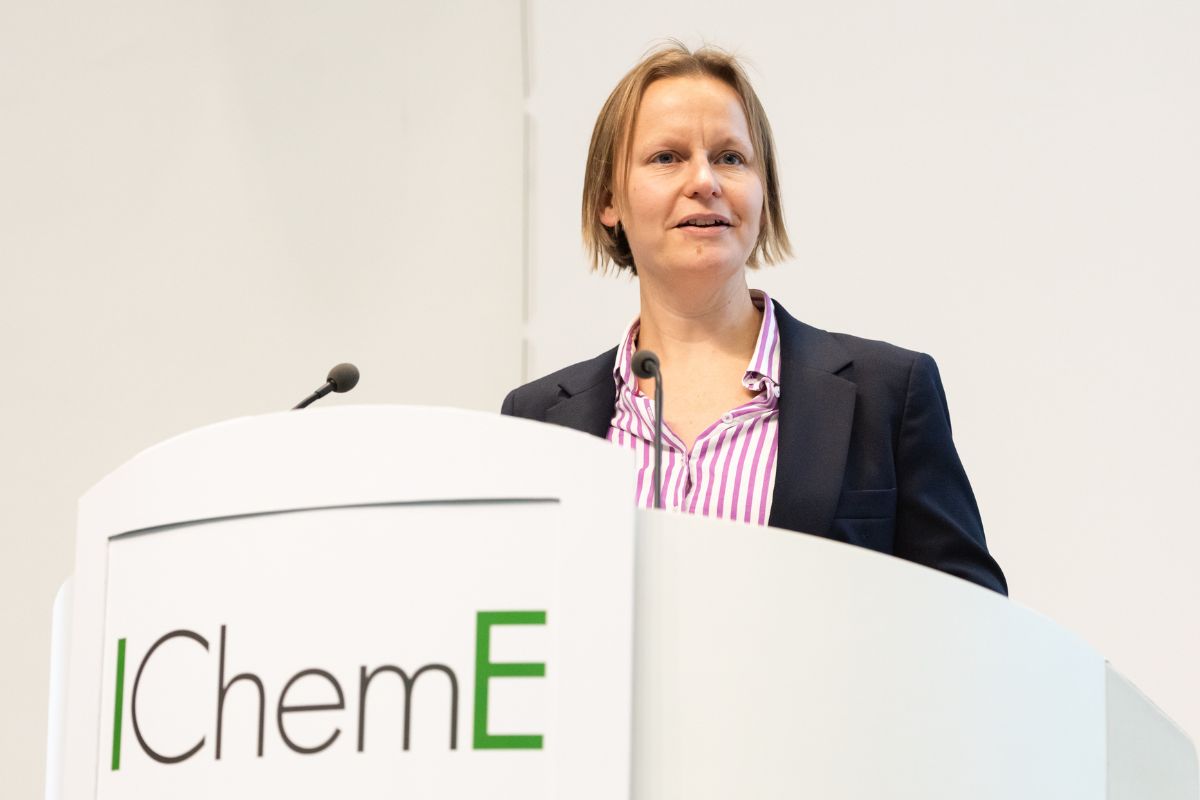
Overcoming Gender Bias Within the UK Engineering Sector
The engineering profession is facing a crisis of skills shortage. An ageing workforce and rapidly changing demands for the engineering industry means that new recruits to the field are highly sought after.
There is an as yet underrealised potential to plug this gap. Only 16.9% of the engineering and technology workforce are women - far below the proportion of women who make up the UK’s workforce as a whole. If we can demonstrate to women the opportunities which come with a career in engineering, the sector has the capability to make up for the UK water industry’s current shortfalls in employee availability.
A key step in improving the statistics surrounding women in engineering is to identify the means to attract them to this profession, how to retain them in the workforce, and support their success within the industry.
What Challenges Do Women Face When Entering STEM Professions?
Women continue to battle social perceptions relating to science and technology jobs. During my Chemical Engineering degree at Loughborough University, under 40% of my peers were women. The proportion of women in my workplaces has only decreased since those days; I would estimate that less than 10 of my female classmates continue to work in engineering within Europe. Working at a London consultancy after my graduation, only 10% of the engineers were women. On one construction project, I was the only professional female amongst approximately 500 men.
From a young age, girls appear to be dissuaded from pursuing a STEM profession. Only 12% of school age girls express an interest in engineering as a career path compared to 38% of boys. Despite a 30% increase in girls taking STEM A-levels in England and a 50.1% increase in female full-time STEM undergraduates, women make up only 29% of the STEM workforce. Reasons cited include gender bias in job descriptions, a lack of visible role models in the sector, or lived experiences of exclusion.
How Can We Make STEM Education More Accessible From An Earlier Age?
My time as an engineer has been nothing short of wonderful, and as a STEM Ambassador with a particular focus on women in engineering, I want to make engineering more appealing for women so they too can experience everything that a career in this field has to offer.
We must work to make education surrounding STEM more accessible from an earlier age. I work with children as young as 12 years old, and they don't recognise what an engineer is or what we do. We need to start off much sooner introducing STEM role models: an engineer helped fix the COVID pandemic; when people fly up to space or people or you see planes flying in the sky or sailing boats, that’s all engineering; your tube of toothpaste, your medication, absolutely everything that's manufactured requires an engineer. It would be so easy to weave it into key subjects - because until kids see it, they won’t know they can do it.
There needs to be enough time in the curriculum for schools and companies to work together. As a STEM ambassador, schools can approach us to collaborate with us. But teachers could also help get engineering into the classroom through partnerships with local engineering companies, to get them to showcase what they make or design, and therefore show their students what you can do as an engineer.
.jpg)
What are the Benefits of Promoting Gender Diversity Within Engineering?
The way that women and men conduct themselves is seen differently, even if they say the same thing and they behave in the same way. Women end up needing to work harder. We have to be the expert, the go-to person so there's no question of our authority - until you're not seen as a woman, you're seen as a technical expert.
But women are built differently, we think differently, so all of those extra special bits that women bring to an organisation are missed if that's not part of the conversation. Studies have shown that water utilities led by women, all with gender diverse executive teams, consistently outperform their peers. UN Water suggests that involving women can increase the effectiveness of water projects several times over because women bring unique insights into community water needs. You need that diverse thinking to come up with the best solutions.
How Can Mentorships Promote Gender Diversity in STEM Workplaces?
Mentoring is about supporting one another. I could mentor someone from another company or vice versa. Personally, I've never had the opportunity of a female mentor. But if there were more women in the workplace, there'd be more mentors who were women and that could keep growing. But until that point, being a mentee still has many benefits. It means having fewer boundaries. If you're at work and you're speaking to a manager above you, it can be a little bit nerve wracking. But if they're your mentor, then all of that hierarchical noise that's in the back of your head goes away. You've got that closer relationship with someone in the same profession as you who's a few rungs higher up the hierarchical ladder. You've got a sponsor, someone who's supporting you.
The more women supporting women we have, the more that the women lower down the career ladder can feel freer, because it'll help with imposter syndrome and everything else that holds women back. Because it's there. You can see it, so you can be it.
We need more voices to lead the change. Join the Pump Centre and be part of the discussion.