
The arrival of AMP8, which took effect from April 2025, brings significant challenges for the UK water industry – an industry already battling factors like climate change, a growing population and ageing infrastructure. While previous AMP cycles have helped water operators build a foundation to tackle mounting issues, AMP8 aims to level this up with a real focus on innovation, environmental and sustainability initiatives, and predictive maintenance to boost operational efficiency.
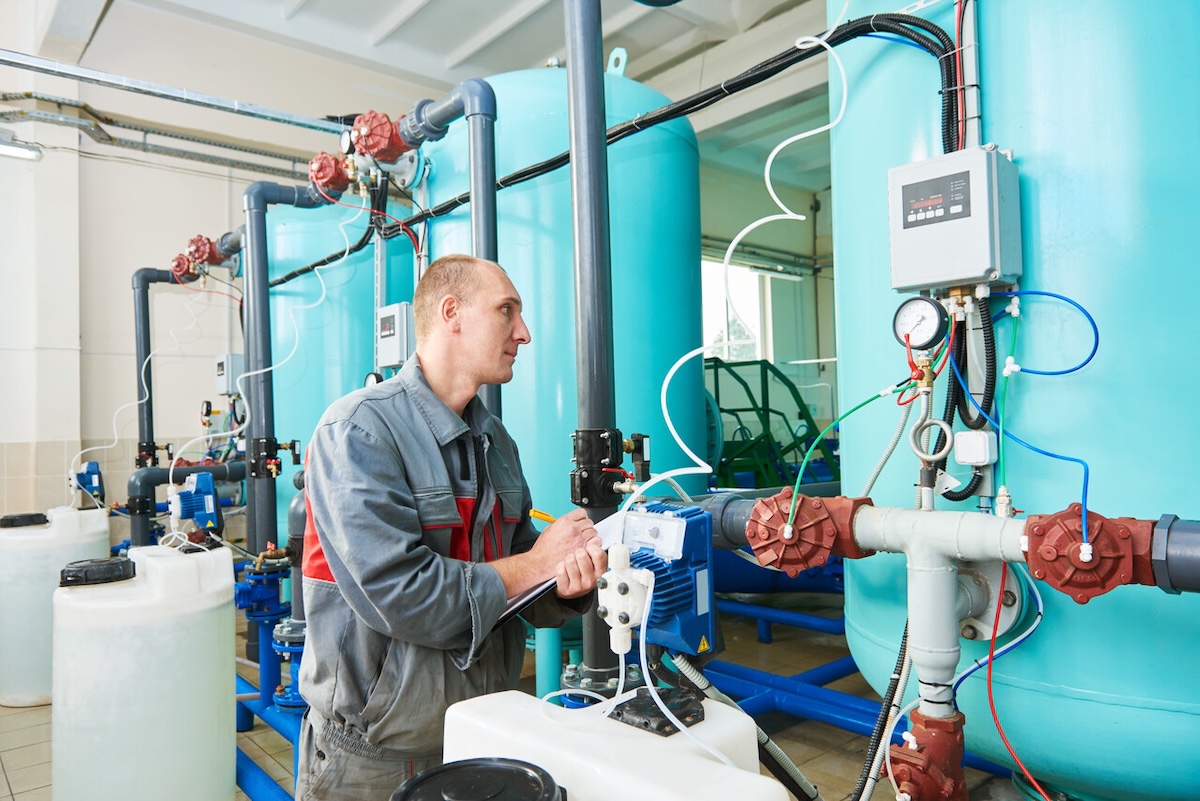
There are a variety of cutting-edge technologies that can be deployed to facilitate digital transformation, from Internet of Things (IoT) devices like sensors, through to digital twin technology. But with challenges including skills shortages, tight budgets, evolving legislation and multi-site maintenance, a considered approach is crucial.
Understanding of Critical Asset Health Must Be Prioritised
With water companies operating on a multi-site basis, there’s bound to be a wide range of assets at different lifecycle stages, and a mix of maintenance maturity to manage this asset menagerie.
With engineer resource likely already stretched with the task of effectively monitoring and maintaining assets, making significant upgrades can be a risk, or sometimes not feasible. A back-to-basics approach of identifying the most critical assets, assessing what can be managed with critical spares replacement, is the best option.
Just because technology or asset upgrades are available doesn’t mean they have to be implemented if viable and more manageable alternatives can keep operations moving. There’s also not just the cost of the upgrade to consider, but the cost of resource to implement it. Sometimes ‘keeping the lights on’ until funds and resource are available is the right approach. Good practice can be good enough – it doesn’t necessarily need to be best practice in every case.
Outsourcing Maintenance to Manage Resource and Downtime
A maintenance engineering report from RS, Performance in Focus, highlighted that 52 per cent of engineers working in the utilities sector spend more than 100 hours per week on unscheduled downtime. This puts a strain on planned, preventative maintenance. Outsourcing maintenance tasks can provide a lifeline in times of skills or labour shortages across multi-site maintenance. One, or several engineers, deployed with thermal cameras to assess assets across many sites can be a significant drain on resource. It can also be onerous on budgets to invest in such devices. It is this kind of maintenance element that can be outsourced to providers that will have both the skills and latest equipment for the task.
Using solutions providers for other maintenance elements provides a viable approach too. Those including calibration to keep equipment accurate and reliable, and lubrication and oil condition monitoring, to improve asset performance and extend asset life. Energy management field services can also help to reduce costs and greenhouse gas emissions by identifying areas for improvement, which is useful for the energy-intensive processes water and wastewater companies have. It also further helps meet the AMP8 carbon reduction directive.
Implementing Upgrades to Meet Legislative Changes Shouldn’t be a Knee-Jerk Reaction
A focus area of AMP8 is sustainability, and reducing carbon footprint. Water companies can work towards carbon reduction goals when upgrading pumps and motors, and the EU’s Ecodesign Regulation 2019/1781 mandates the implementation of more efficient motors when replacements are due. This is in accordance with its requirements to boost energy efficiency and reduce CO2 emissions.
The 2021 legislation meant that any new motor purchases 0.75kW and over had to be a minimum of IE3 performance. In 2023, this was again updated so new motor purchases ranging from power sizes 75kW-200kW had to be a minimum of IE4 performance.
While IE4 motors are probably the highest induction motors currently in operation, there are newer technologies available, including the IE5 Synchronous Reluctance motors (SynRM). IE5 efficiency is made possible by SynRM technology, which combines the performance of permanent magnet motors with the simplicity of induction motors. With a magnet-free design, they do not contain rare earth materials, which makes them environmentally friendly.
Synchronous reluctance (SynRM) motors offer a levelled-up energy efficiency and meet the IE5 ultra-premium efficiency class, as defined by the International Electrotechnical Commission. Also recently released was IE6 Synchronous Reluctance Motor, offering power sizes 110kW – 450kW.
What is worth considering, from a retrofit perspective, is that a VSD (variable speed drive) is required to run and operate a SynRM motor properly, whereas induction motors can operate using more traditional motor starting methods. And while IE1/IE2 motors are still in operation and working or serviceable, water companies need not necessarily rush to replace. The more sustainable or viable option, taking into account the asset criticality, man hours in pump motor installation and cost of the new pump might be to keep it running.
Additionally, water companies can be fined if downtime occurs as a result of equipment not being operational – and an upgrade might pose more risk of that than a maintenance task. With the energy saving return on investment of pump motor upgrades being in the region of two to three years, it’s a factor to consider before rushing into legislation-led upgrades. Water companies must only upgrade if completely replacing the motor.
While AMP8 brings with it a variety of objectives and mandatory action, when it comes to maintenance, it's clear there are a whole host of factors in to consider. A holistic view of all assets, available resource, potential downtime from upgrade work and return on investment is needed to make the right decisions and stay within AMP8 requirements.
Source: Milesh Patel (Supplier Manager – Automation & Control / Electrification), RS Components